What to Say When a Conversation Feels Hard
Jun 23, 2026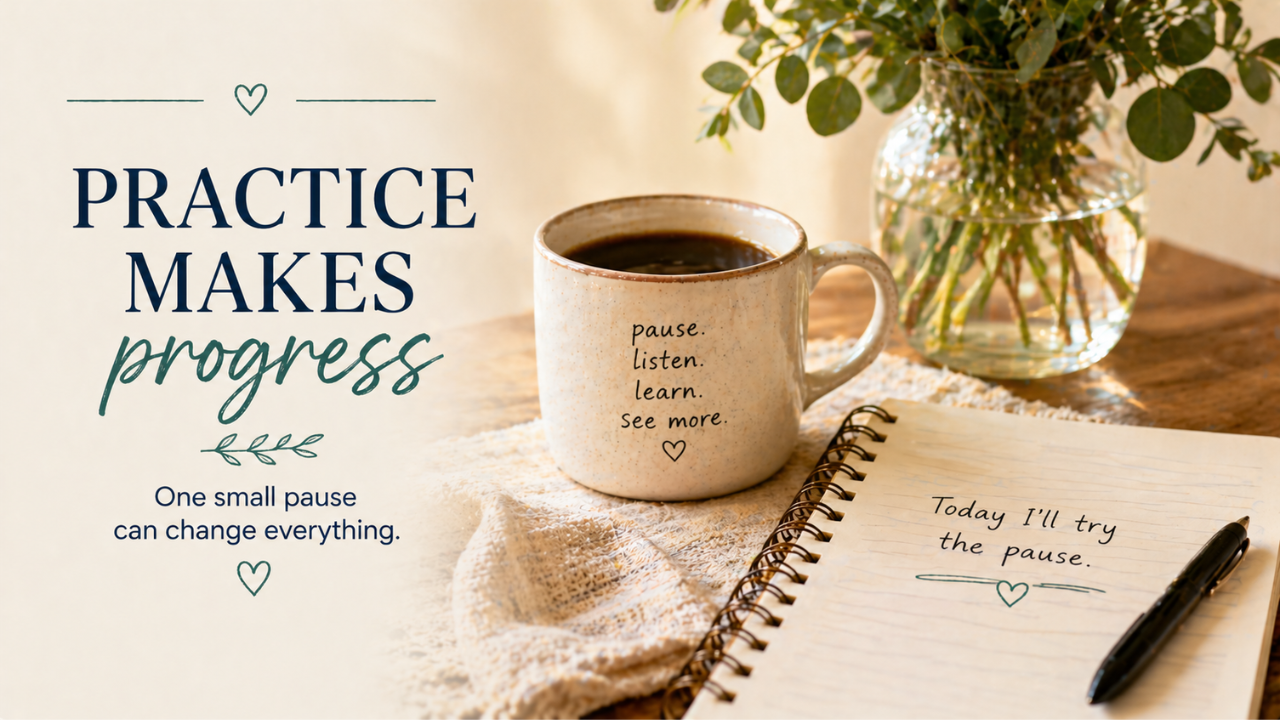
We've talked about crayons and conversation and curriculum. This is the week we do something with all this. This the week we take action…like the crayons. 🖍️
So I want to ask you, would you be willing to try the pause?
(Pause before you answer and think it through. 😉)
Before you respond to the thing someone says, pause. Take a moment to be silent and give the other person's words a chance to land for you, and for them. A moment to hear what is being said before you form your reply. Enough time so that the next thing out of your mouth is something you chose, not just a spontaneous reaction.
That's it.
And here's a thought to practice…I am being quiet. (Side note that's also about the length of a good pause.)
If a visual helps, try this. Someone says something and you visualize the words landing somewhere between the two of you. You say a phrase or count to 3 or 5 before you do anything with those words. You take a breath and decide what you will say and you say it.
Jefferson Fisher calls the pause the most effective tool in conversation in his book, The Next Conversation (affiliate). I believe him, because every time I have tried it, I had better words or the person speaking to me heard their own words and did a course correction. The pause means that I might end up asking a question instead of making a point. I might realize I don't need to say a thing.
Think of Duncan when you are trying to do this. Maybe even pretend you are opening the other person's words on a letter they've sent to you.
If you try it this week, notice what happens. Maybe it’s someone at work or someone in your family. Maybe the person behind the counter at the coffee shop. You pick. Notice what happens. Repeat as often as you like.
Before you go, one more thing. Hide a crayon in plain view. Somewhere you will see it this week. Let it remind you to pause.
(Pause) I'll be cheering you on,